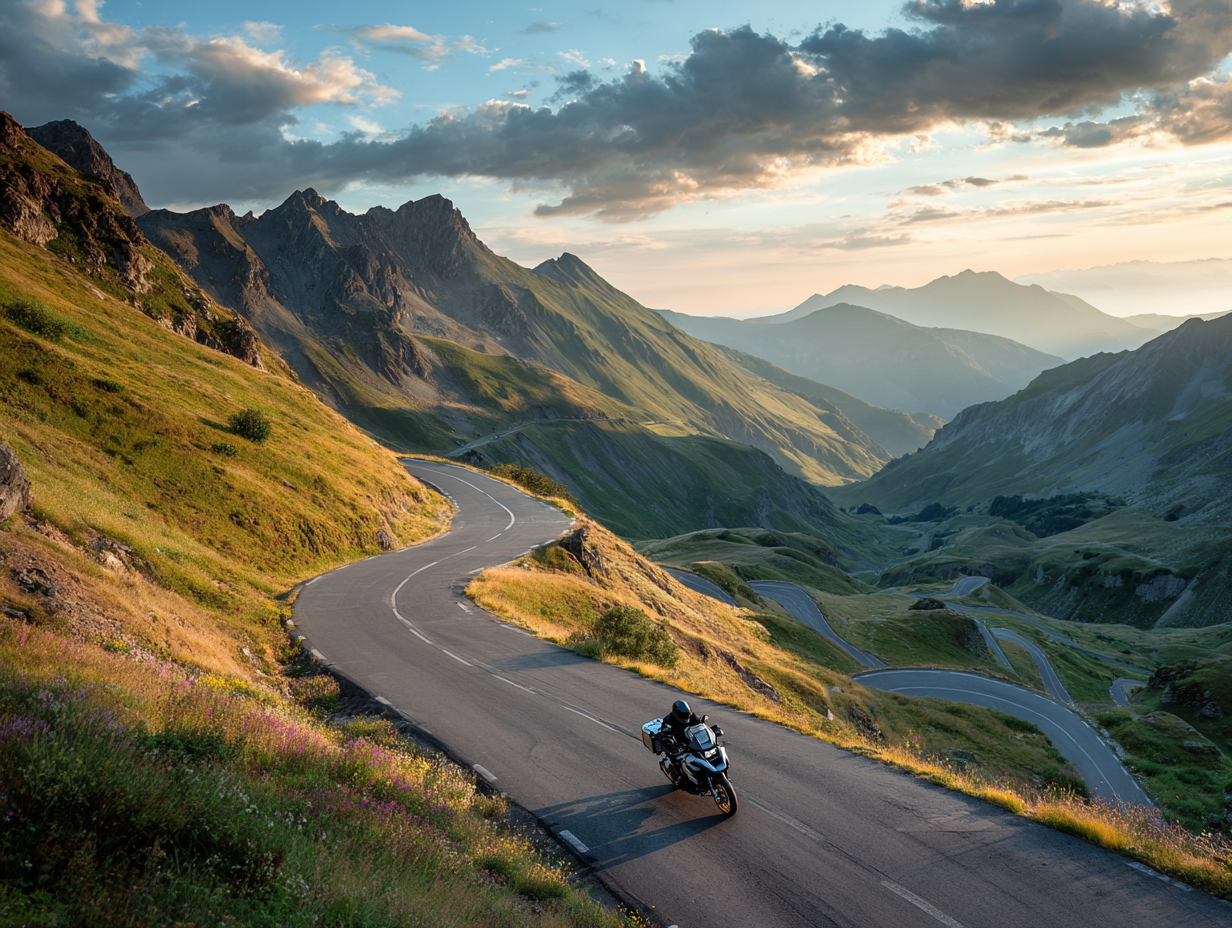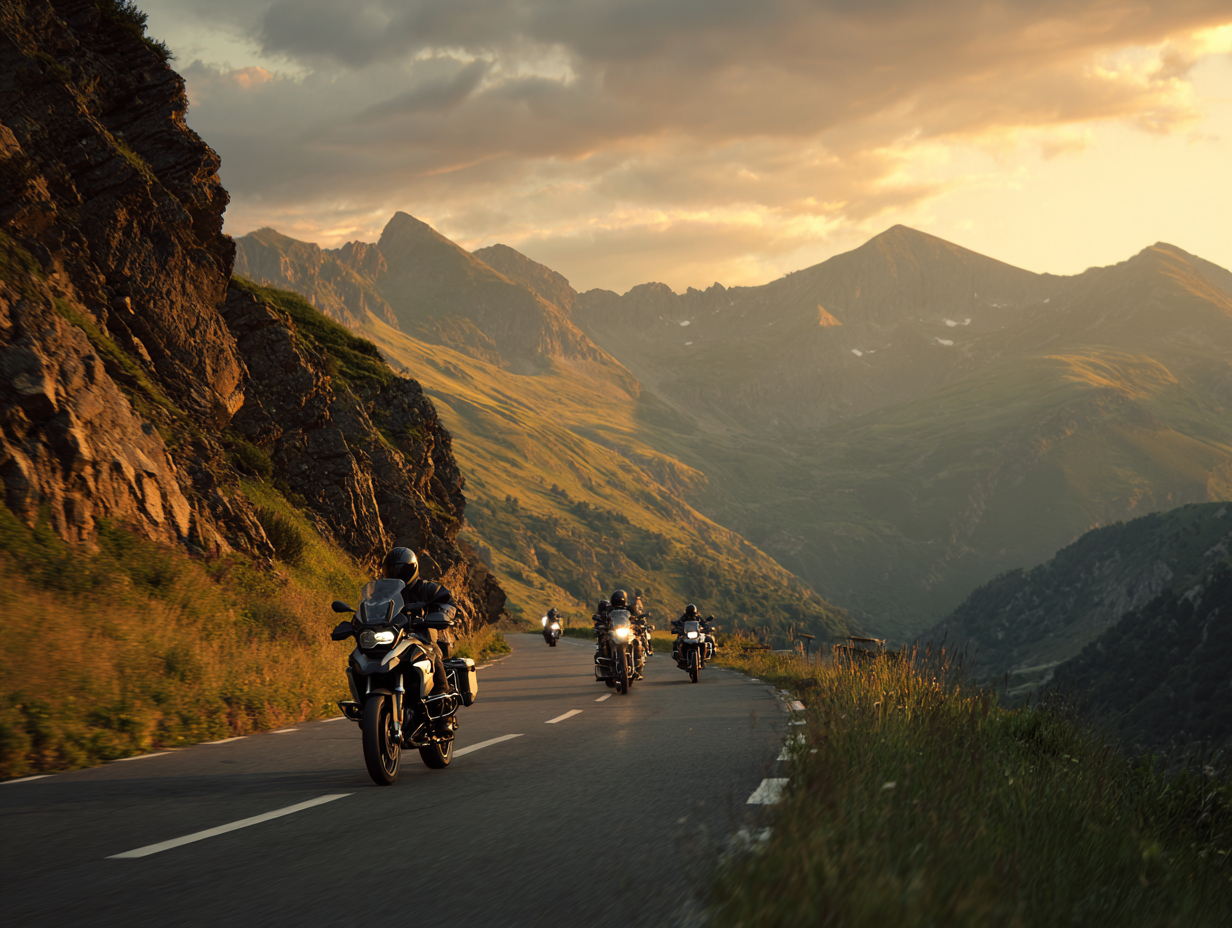
Two of Europe's greatest mountain ranges, separated by 400 kilometres of southern France, each offering some of the finest motorcycle roads on the continent. But they are not the same ride. The Alps are higher, more famous, and more crowded. The Pyrenees are wilder, quieter, and arguably more rewarding for the rider who values solitude and authenticity over spectacle. Here is an honest comparison from guides who have ridden both extensively.
The Roads — Where It Matters Most
The Alps have more famous passes — Stelvio, Grossglockner, Gotthard, Furka — and the road surfaces are generally immaculate. Swiss and Austrian engineering keeps the tarmac smooth and the barriers solid. You will share these roads with tour buses, caravans, cyclists by the hundred, and other motorcyclists by the thousand. On a July weekend, the Stelvio feels less like a mountain pass and more like a motorway ramp.
The Pyrenees have fewer headline names but the riding is consistently better. The Col du Tourmalet, Col d'Aubisque, Col du Pourtalet, Col de Pailhères — these are world-class roads with a fraction of the traffic. You can ride the Aubisque on a Tuesday in June and see three cars in an hour. Try that on the Grossglockner. The road surfaces vary more — some D-roads in the Ariège are rougher than anything you would find in Switzerland — but that is part of the character.
"You ride the Alps for the views. You ride the Pyrenees for the riding."
Traffic and Crowds — The Decisive Factor
This is where the Pyrenees win decisively. The Alps attract roughly ten times the tourist traffic of the Pyrenees. Dolomite passes in summer are bumper-to-bumper. Alpine villages are polished, expensive, and built for tourism at scale. The Pyrenees remain largely undiscovered by the mass motorcycle touring market — particularly the central and western sections between the Tourmalet and the Atlantic.
In practical terms: you will rarely queue at a Pyrenean col. You will rarely struggle to find parking at a village. You will rarely feel like one of a hundred identical GS riders on the same stretch of road. The riding feels personal, not processional.
Scenery — Different, Not Lesser
The Alps are vertical. Glaciers, snowfields, 4,000-metre peaks, sheer rock walls — the scale is overwhelming and undeniable. If raw altitude and drama are what you want, the Alps deliver.
The Pyrenees are more varied. In a single day, you can ride from green Basque valleys to high-altitude moonscapes above the Tourmalet, down to Spanish canyon roads, through medieval hilltop villages, and finish in a Gascony vineyard. The range compresses an extraordinary diversity of landscape into shorter distances. The light is different too — the southern French light has a warmth and clarity that flatters every photograph.
Quick Comparison
- Highest paved pass: Alps — Stelvio 2,757 m | Pyrenees — Tourmalet 2,115 m
- Traffic density: Alps — High to extreme | Pyrenees — Low to moderate
- Road quality: Alps — Excellent | Pyrenees — Good to excellent
- Fuel cost: Alps — €2.10+/L (CH) | Pyrenees — €1.75/L (FR), €1.55/L (ES)
- Hotel cost: Alps — €150–300/night | Pyrenees — €80–180/night
- Riding season: Alps — June to September | Pyrenees — May to October
Cost — The Pyrenees Win Again
Switzerland and Austria are expensive. Fuel in Switzerland is over €2 per litre. A decent hotel in the Engadin or Zillertal runs €200–300 per night. Vignettes, tunnel tolls, and the general cost of Alpine tourism add up fast.
The Pyrenees — particularly the French and Spanish sides — remain genuinely affordable. A 4-star hotel with pool in the Gers or Hautes-Pyrénées is €100–150 per night. A Michelin-recommended dinner in a Gascon auberge is €35–50. Fuel in Spain is among the cheapest in Western Europe. The Pyrenees offer a premium riding experience at a fraction of the Alpine price.
Season — The Pyrenees Are Longer
Most Alpine passes open in mid-June and close in September or early October. The Stelvio is typically open from late May to mid-November, but many Swiss and Austrian passes have a much shorter window.
In the Pyrenees, the lower and mid-altitude passes — which still offer extraordinary riding — are open from April to November. The Tourmalet and Aubisque typically open in late May and stay open until late October. The valley roads, the Dordogne circuits, and the medieval village routes are rideable year-round. You get a solid six-month season, and the shoulder months — May, June, September, October — are often the best riding of all.
Culture and Gastronomy — No Contest
The Alps have fondue, raclette, and Tyrolean strudel. These are fine. The Pyrenees have duck confit, cassoulet, Basque pintxos, Gascon foie gras, Rocamadour cheese, Jurançon wine, Armagnac, and an unbroken tradition of market-driven regional cooking that is among the finest in Europe. Southwest France is one of the great gastronomic regions in the world. The Alps are not.
Medieval villages are another Pyrenean advantage. The Dordogne and Lot valleys contain the densest concentration of classified Most Beautiful Villages in France anywhere in the country. Rocamadour, Saint-Cirq-Lapopie, Cordes-sur-Ciel, Beynac, La Roque-Gageac — these are not tourist recreations. They are living medieval settlements on roads that are themselves exceptional to ride.
The Verdict — It Depends What You Want
If you want the biggest peaks, the most famous passes, and you do not mind sharing them with half of Europe — ride the Alps. If you want the best riding, the emptiest roads, the richest food, and the feeling that you have discovered something most riders have not — ride the Pyrenees.
We may be biased. We live here. But we have ridden the Alps too, many times, and we keep coming back to these mountains. The Pyrenees are the rider's range.
Ride the Pyrenees with us
Guided tours from June to September. Tourmalet, Aubisque, Pourtalet, Pailhères — the passes that make the difference. Max 6 riders, 4-star hotels, Michelin dining.
Ride With Us
Our Heart of the Pyrenees tour covers the Tourmalet, Aubisque, Pourtalet and Pailhères in 5 days. The Medieval Villages tour adds the Dordogne, Lot and Tarn. The Grand Tour combines both into the ultimate Southwest France motorcycle experience.