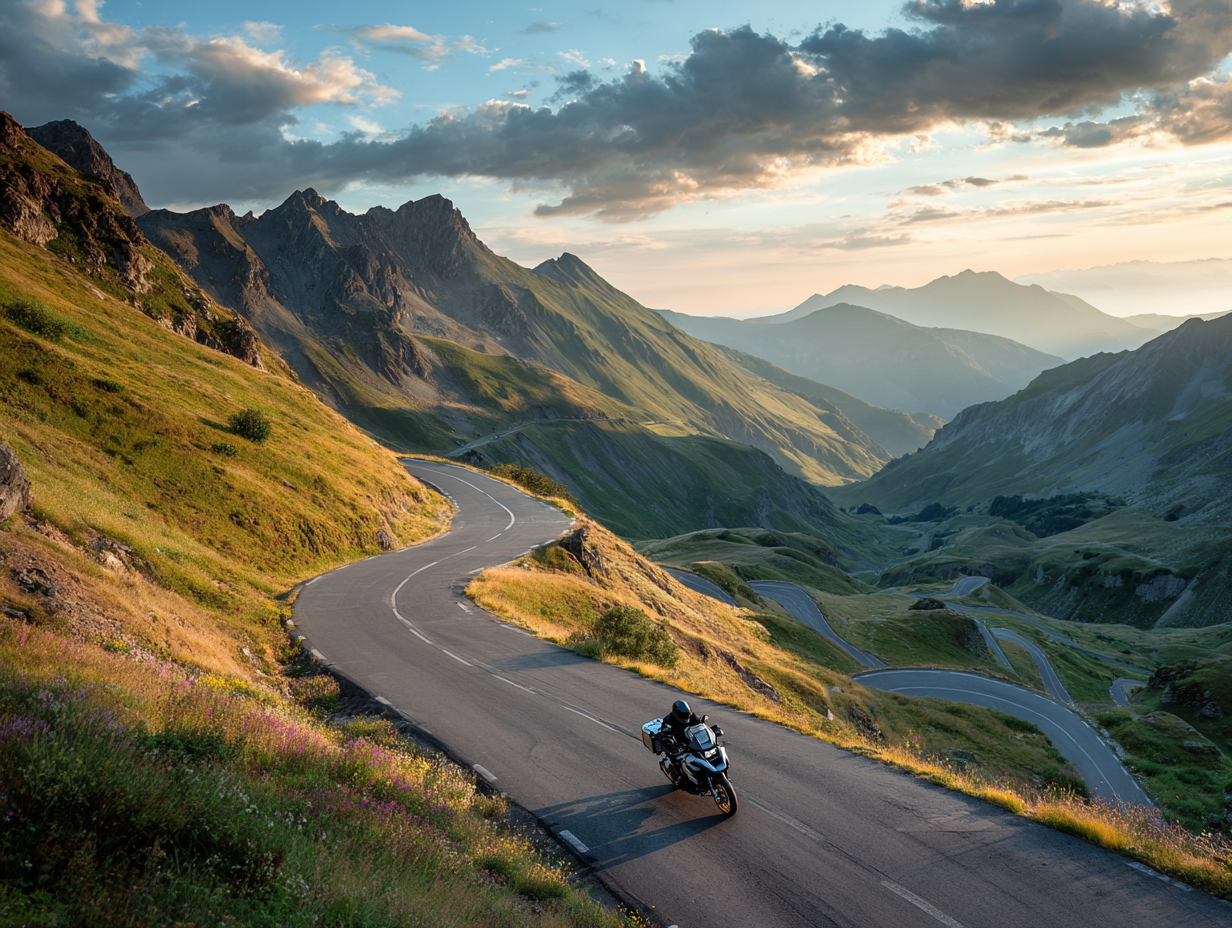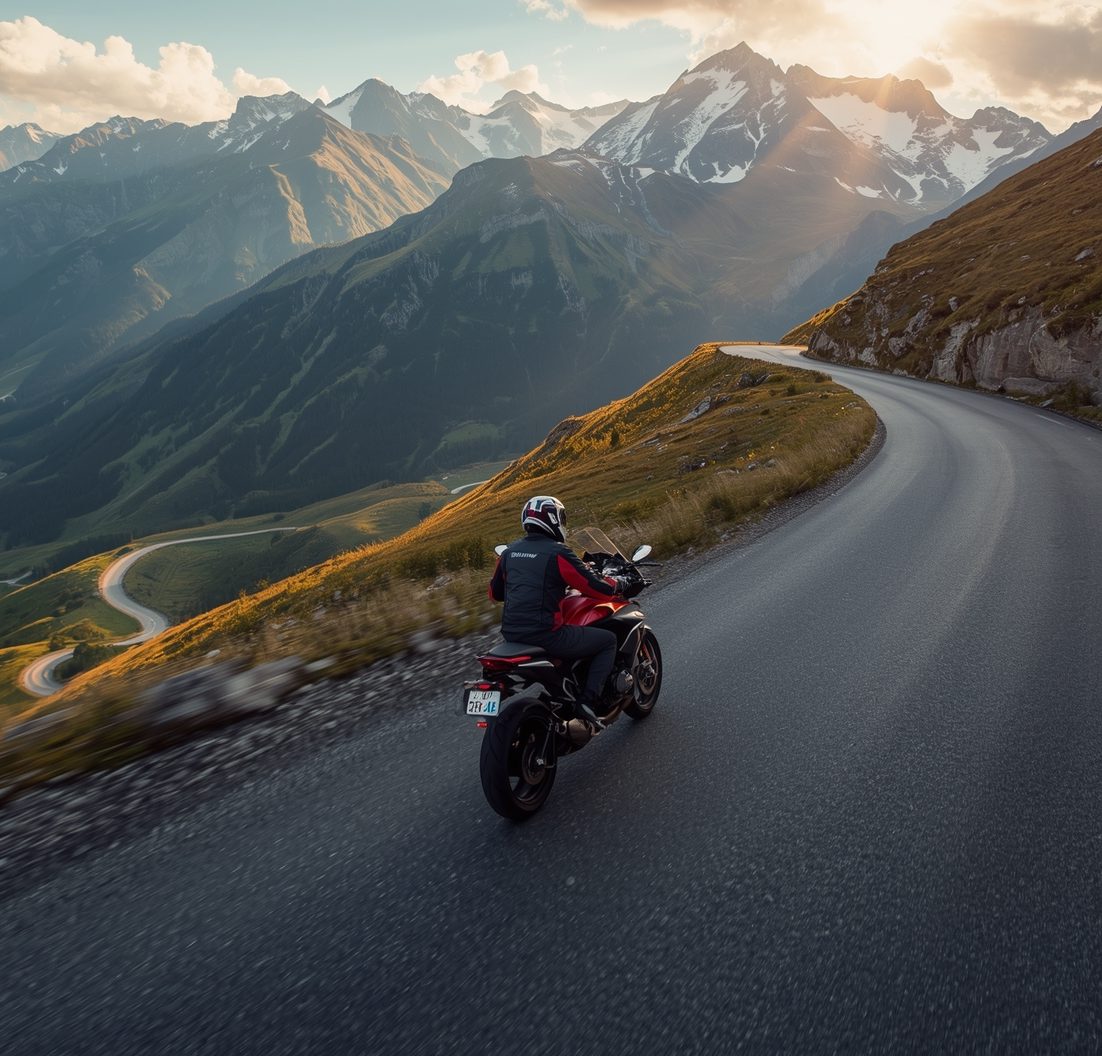
Not all Pyrenees passes are equal. Some are wide, smooth and forgiving — perfect for riders building confidence on mountain roads. Others demand total focus, punish hesitation, and will remind you firmly that altitude and exposure are not abstract concepts. This guide ranks the main passes by difficulty so you can plan a route that matches your actual skill level, not the one you imagine you have.
The ratings below are based on gradient, road width, surface quality, exposure, traffic, and the margin for error on both ascent and descent. A pass that is technically easy can still demand respect in poor weather — conditions in the Pyrenees can change within the hour, and every rating here assumes dry roads and reasonable visibility.
Accessible Passes
These passes are genuine mountain roads — altitude is real, gradients are significant — but the road width, surface quality and corner radii are forgiving enough for riders who are new to the Pyrenees. Ride at your own pace and they are thoroughly enjoyable.
Col d'Aspin — The Ideal First Pyrenees Pass
The Col d'Aspin is the standard introduction to Pyrenees mountain riding and the most forgiving of the central cols. The gradient from Sainte-Marie-de-Campan is steady rather than sharp, the curves are well-radius'd, and the road is wide enough to correct a line without consequences. The summit plateau at 1,490m is open and spacious — Pyrenean horses often graze at the top. The descent toward Arreau is equally readable. A perfect first col, and a good warm-up before the Tourmalet.
- Wide, well-maintained road throughout
- Gradual, consistent gradient
- Open summit with panoramic views
- Light traffic outside July–August
Col de Peyresourde — Flow State on Two Wheels
Peyresourde sits between the more celebrated Aspin and Tourmalet on the classic Tour de France loop, which means most riders treat it as a connector rather than a destination. That is a mistake. The road from Bagnères-de-Luchon follows a consistent rhythm of medium-radius curves through open mountain pasture — the kind of riding that settles into genuine flow. No exposure, no tight switchbacks, no drama. If you want to know what it feels like to ride a Pyrenean pass well, this is the road to practise on.
- Consistent medium-radius curves
- Smooth, well-maintained surface
- No significant exposure
- Underrated — low traffic even in summer
Cirque de Gavarnie Route — Spectacle Over Difficulty
The road from Luz-Saint-Sauveur to Gavarnie is not technically demanding — good surface, moderate gradient, manageable corners. What it offers instead is one of the most extraordinary destinations a road can lead to: the Cirque de Gavarnie, a glacially carved horseshoe of cliff rising 1,400 metres from the valley floor, with the Grande Cascade waterfall dropping 422 metres from the snowfield above. This is the route for riders who want drama in the landscape rather than drama in the riding itself. Suitable for all levels, including pillions and larger touring bikes.
- No technical difficulty
- UNESCO World Heritage destination
- 422-metre waterfall at road's end
- Suitable for all bike types and experience levels
Moderate Passes
These passes require genuine mountain riding experience. Gradients are sharper, corners tighter, and sections of exposure appear. Riders who are confident on winding B-roads will manage them well — but they demand your full attention throughout.
Col du Tourmalet — The Benchmark
The Tourmalet at 2,115m is the highest paved pass in the French Pyrenees and the reference point against which all other cols are measured. Despite its reputation, it is not the most technically demanding pass in the range — the road is wide, the curves are well-radius'd, and the surface is excellently maintained. What elevates the difficulty is altitude (the air is noticeably thinner above La Mongie), the false summits that accumulate rider fatigue on the ascent, and the western descent to Barèges which is considerably steeper and narrower than the famous eastern face. Ride the eastern approach early — before 9am in high summer — to avoid the vehicles.
- Wide, confident curves on eastern ascent
- Western descent to Barèges steeper and narrower
- Altitude fatigue above 1,900m
- Traffic can be heavy on summer weekends
Col du Soulor — Underrated and Excellent
The Col du Soulor at 1,474m is almost always discussed as the supporting act to the Aubisque, which it connects via the Cirque du Litor traverse. It deserves considerably more credit on its own terms. The ascent from Arrens-Marsous through beech forest is technically engaging and well-paced. The summit opens onto wide mountain pasture with views south into Spain. The connection to the Aubisque adds a section of genuine exposure — the cliff-edge traverse — which pushes the combined route into moderate-to-demanding territory. Ridden alone, the Soulor is a moderate pass with excellent rhythm and minimal traffic.
- Engaging climb through beech forest
- Wide views from summit plateau
- Cirque du Litor traverse adds exposure
- Low traffic — often overlooked by tourists
Col de Menté — Precision Over Speed
The Col de Menté at 1,349m sits in the quieter Haute-Garonne department and rewards precise riding over fast riding. The southern ascent from Saint-Béat has tight switchbacks that demand consistent line discipline — arrive wide, apex late, let the bike track its own line out. The road is narrower than the central showcase cols and does not forgive lazy positioning. No significant exposure, but the corners keep asking questions. The northern descent toward Saint-Gaudens opens into faster sweepers — a satisfying contrast. Traffic is minimal throughout, which makes it an excellent technical workout without the pressure of oncoming camper vans.
- Tight switchbacks requiring line discipline
- Narrow road — no room for lazy positioning
- Fast, flowing northern descent
- Almost no traffic year-round
"The Pyrenees will always give you more than you came for. The difficulty rating is just the entry price."
Demanding Passes
These are passes for experienced mountain riders. Exposure is real, margins are reduced, and conditions can change fast. Ride them on a clear day, with a bike you know, at a pace that allows time to think. They are among the finest roads in Europe — and they will let you know if you are not ready.
Col d'Aubisque — The Cliff-Edge Road
The Col d'Aubisque at 1,709m earns its demanding rating not from gradient or corner radius but from exposure. The Cirque du Litor traverse — the section between the Aubisque and the Soulor — is a narrow road cut directly into a cliff face with sheer drops on one side and rock wall on the other. No barriers. The drop to the valley floor is immediate and considerable. Riders who are comfortable with exposure will find this one of the most extraordinary kilometres of tarmac in Europe. Riders who are not should approach carefully or choose a different line. The approach from Laruns through Eaux-Bonnes is excellent preparation — long, flowing curves through beech forest that settle your rhythm before the exposure begins.
- Cirque du Litor traverse — cliff edge, no barriers
- Immediate drop on exposed sections
- Excellent flowing approach from Laruns
- Unsuitable for riders not comfortable with exposure
Col de Pailhères — The Ariège's Untamed Giant
The Col de Pailhères at 2,001m is the highest paved road in the Pyrenean range and almost nobody knows it. Sitting in the wilder, less-visited Ariège department, it lacks the polish of the central showcase passes — the corners are less groomed, the elevation changes sharper, the exposed upper section above 1,800m genuinely austere. The road from Ax-les-Thermes climbs through beech forest then open moorland before the terrain becomes rocky and the sky closes in. The summit, when it comes, feels earned rather than delivered. A particular favourite of riders who have already done the central cols and are looking for something less curated and more serious.
- Highest paved road in the Pyrenees at 2,001m
- Sharp elevation changes, less groomed corners
- Austere, exposed upper section above 1,800m
- Almost no traffic — wild and serious character
Col du Pourtalet — Two Countries, Two Characters
The Col du Pourtalet at 1,794m marks the French-Spanish border and the two faces of the pass have entirely different characters. The northern ascent from Laruns via Eaux-Bonnes is wide and deliberate — a long climb that builds gradually with good visibility. The Spanish southern descent drops faster, opens wider, and gives you less time to think. The change in road character at the border is one of the more interesting experiences in Pyrenean riding: same mountain, different country, different approach to tarmac. The surrounding landscape is open and exposed at altitude. Road surface is good on both sides.
- Border crossing at 1,794m
- French and Spanish faces have distinct characters
- Open, exposed terrain at altitude
- Steeper, faster Spanish descent
Col du Portet d'Aspet — Narrow, Technical, Unforgiving
At 1,069m the Col du Portet d'Aspet is not high by Pyrenean standards — but altitude is not what makes a road demanding. The forest sections are genuinely narrow, the corners tight, and the surface less predictable than the maintained showcase passes. It demands attention in a way the wider cols do not, and the margin for error through the technical sections is reduced. A Tour de France fixture since the 1950s, it was where Fabio Casartelli died in a crash in 1995 — a reminder that the road is serious. The northern descent toward Saint-Gaudens is fast and flowing, a contrast that rewards precision on the climb.
- Narrow forest sections — reduced margins
- Less predictable surface than central cols
- Tour de France fixture since the 1950s
- Fast, rewarding northern descent
All Passes at a Glance
| Pass | Altitude | Difficulty | Key Character |
|---|---|---|---|
| Col d'Aspin | 1,490m | Accessible | Wide, gradual, ideal introduction |
| Col de Peyresourde | 1,569m | Accessible | Medium-radius flow, smooth surface |
| Cirque de Gavarnie | ~1,400m | Accessible | Easy road, extraordinary destination |
| Col du Tourmalet | 2,115m | Moderate | Wide curves, altitude fatigue, traffic |
| Col du Soulor | 1,474m | Moderate | Beech forest climb, exposed traverse |
| Col de Menté | 1,349m | Moderate | Tight switchbacks, precise line needed |
| Col d'Aubisque | 1,709m | Demanding | Cliff-edge traverse, no barriers |
| Col de Pailhères | 2,001m | Demanding | Highest pass, austere and wild |
| Col du Pourtalet | 1,794m | Demanding | Border crossing, fast Spanish descent |
| Col du Portet d'Aspet | 1,069m | Demanding | Narrow, technical, reduced margins |
Not sure which passes suit your level?
Our guided tours are built around your experience. Accessible routes for all levels, demanding itineraries for experienced riders — we match the route to the rider, not the other way around.
A note on conditions
Every difficulty rating above assumes dry roads, good visibility, and a bike in proper working order. Wet tarmac, morning frost, afternoon cloud and livestock on the road can elevate any of these passes by one full difficulty level. The Pyrenees weather moves fast. Check forecasts, start early, and pack waterproofs regardless of what the morning sky looks like.