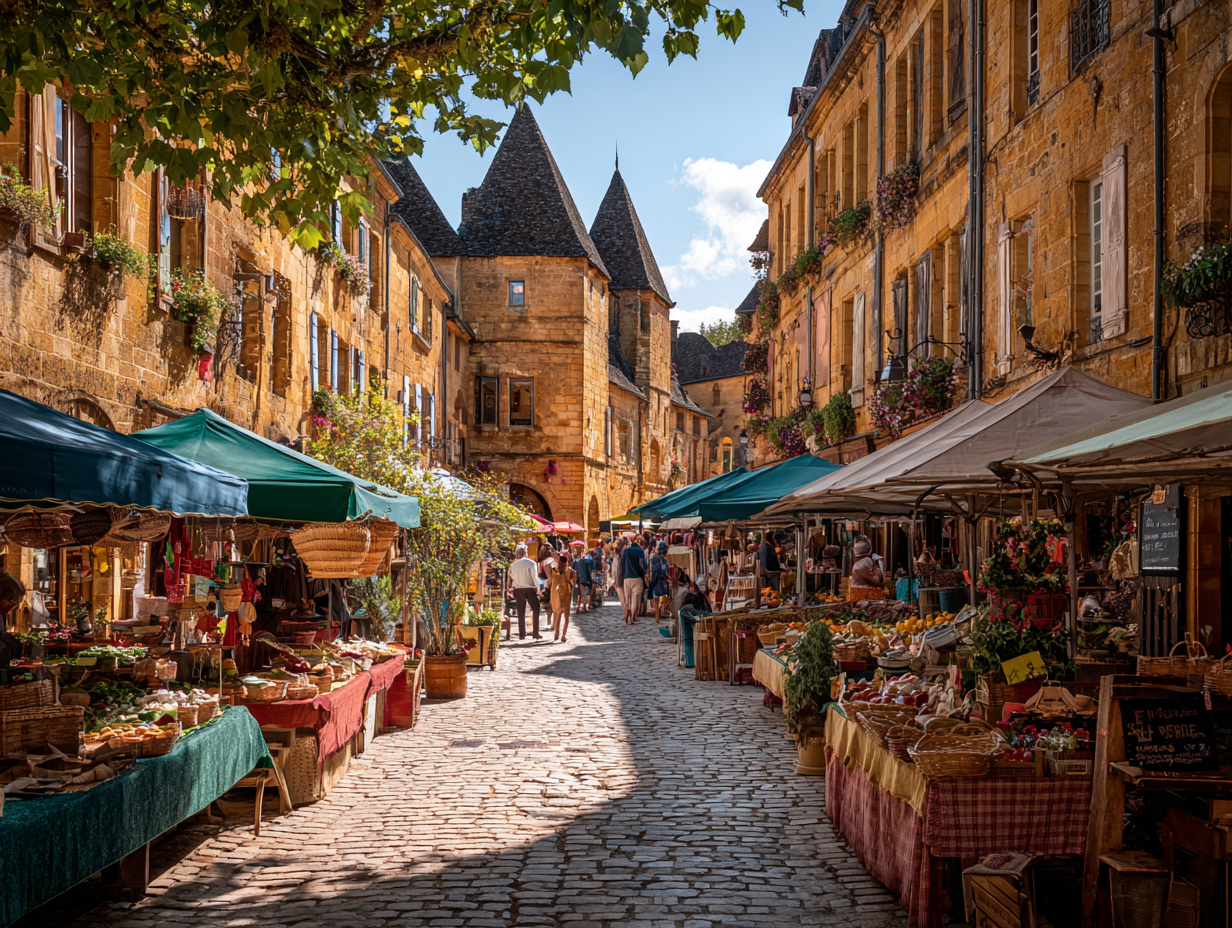
The routes north from the Pyrenees pass through some of the most extraordinary medieval townscapes in France — a corridor of golden limestone, cliff-face architecture, and preserved history running through the Périgord and Quercy. Three towns in particular reward the time it takes to stop: Sarlat-la-Canéda, Rocamadour, and Saint-Cirq-Lapopie, perched 80 metres above the Lot river.
Sarlat-la-Canéda — The Golden Town
The entire old town is built from honey-coloured limestone. The Saturday morning market is the main event — stalls selling truffles, duck confit, foie gras, walnut oil, and the region's preserved goods expand from the central market hall across every square and side street. It is genuinely one of the great markets in provincial France. Stay at least one night: the town after the day-trippers leave is a quieter and more honest place.
Rocamadour — The Impossible Village
Rocamadour occupies a sheer cliff face above the gorge of the Alzou river — seven levels of habitation, chapels, and ramparts stacked vertically in a manner that makes photographs look retouched. It has been a pilgrimage destination since the 12th century and remains the second most visited site in France outside Paris. Approach from the valley floor on the D673 for the most dramatic view.
Saint-Cirq-Lapopie — The Lot Valley's Best Kept Secret
Perched 80 metres above the Lot river, this village commands a view that has attracted artists for over a century. André Breton lived here and described it as a place that prevented him from imagining living anywhere else. The road approaching from either direction along the valley is outstanding motorcycle riding: tight curves, river views, dramatic landscape change.
Practical Notes — All Three Villages
- Best loop Lot Valley — 2 days, approx. 280km, suits all levels
- Best single day Rocamadour + Saint-Cirq from Cahors — 120km, excellent roads
- Market days Sarlat: Saturday (main), Wednesday (smaller)
- Avoid Rocamadour on Saturday afternoons in July–August
- Book ahead Sarlat accommodation 6 weeks minimum in July–August

