An Epic Traverse of the French, Spanish, and Andorran Pyrenees: Majestic Landscapes & Technical Routes
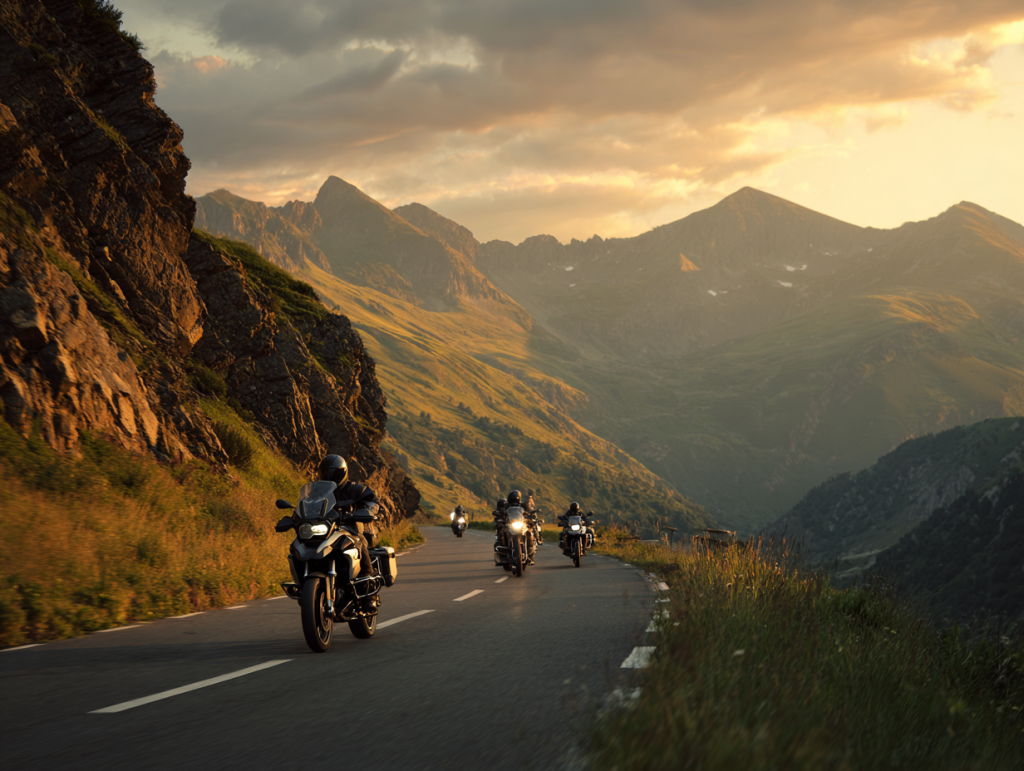
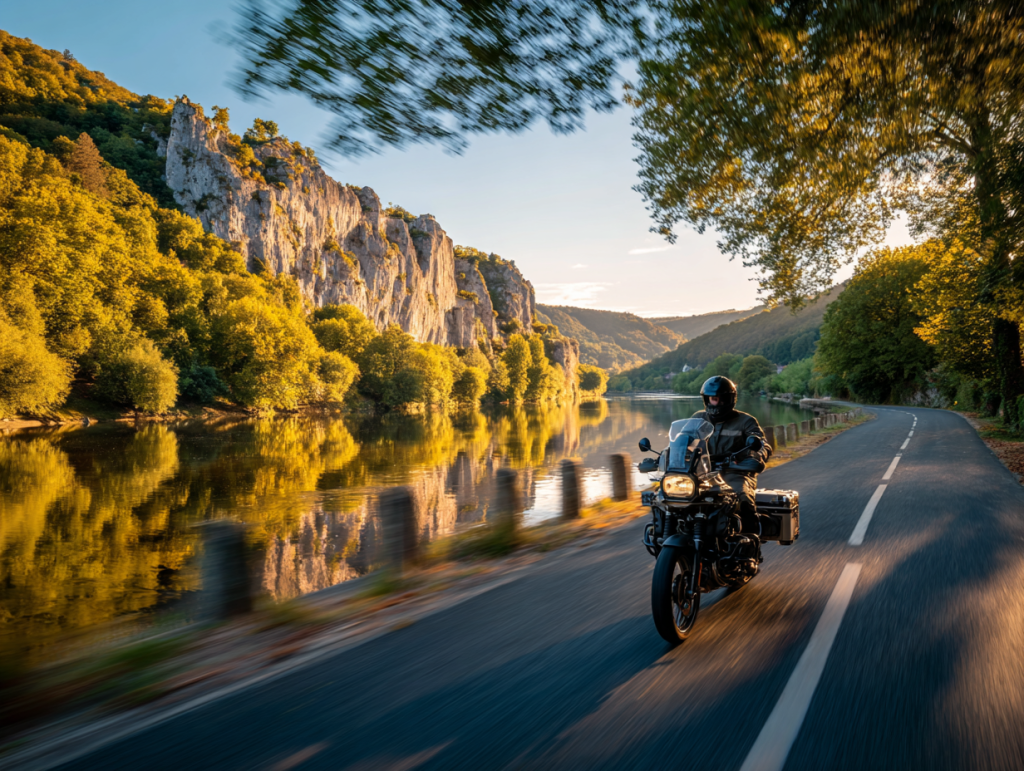
There are mountains and then there are the Pyrenees. A 430-kilometre wall of rock and sky running from the Atlantic coast to the Mediterranean shore, with passes that reach above 2,000 metres and roads that cling to cliff faces with extraordinary confidence. The Col du Tourmalet. The Col d'Aubisque. The Col de Pailhères. These are not just roads — they are the reason motorcycles were invented.
Our Heart of the Pyrenees tour is a summer itinerary. It gives you five days in the high mountain zone, crossing from France into Spain and through Andorra before returning via the highest paved road in the range. We ride the iconic passes but also the lesser-known routes that only local knowledge can unlock: mountain backroads between valleys, quiet cols that see a dozen motorcycles all summer. Critically, the summer season opens the full Tourmalet traverse — both faces of the mountain, including the descent to Barèges — roads that are simply unavailable in any other season.
The pace is deliberate. We stop at viewpoints because you'll want to. Lunches are long, dinners are longer — and those dinners matter. Every night, a 4-star mountain hotel with spa and pool chosen for character rather than category: stone, views, and a garage for the bike. Every significant dinner at a Michelin-recognised table, including a Michelin-starred restaurant in the medieval hilltop village of Aínsa, where the N-260 deposits you as the light turns gold and a porticoed square waits for you to sit down and understand what this day was worth.
There is no polite way to describe what the Col d'Aubisque does to a rider. You don't describe it when you get home. You draw it in the air with your hands.
Maximum six riders. Summer only. No compromise.
What's included: 4-star hotels with spa and pool at all overnight stops · Michelin-starred and Michelin-recognised gourmet dinners · Daily breakfast · Expert bilingual guide all 5 days · GPS routes and daily briefing · 24/7 cross-border emergency assistance.
What you'll see
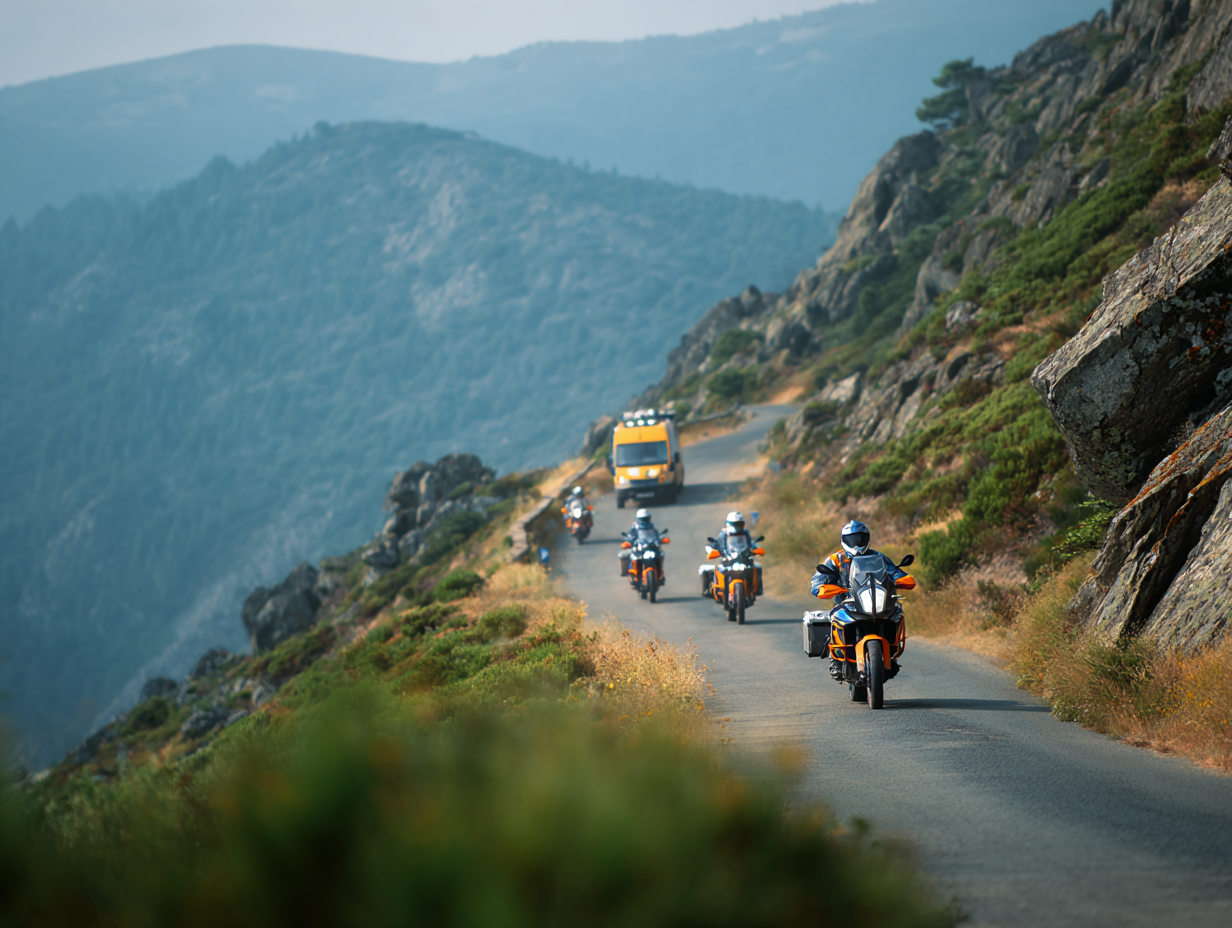
Key moments of the ride
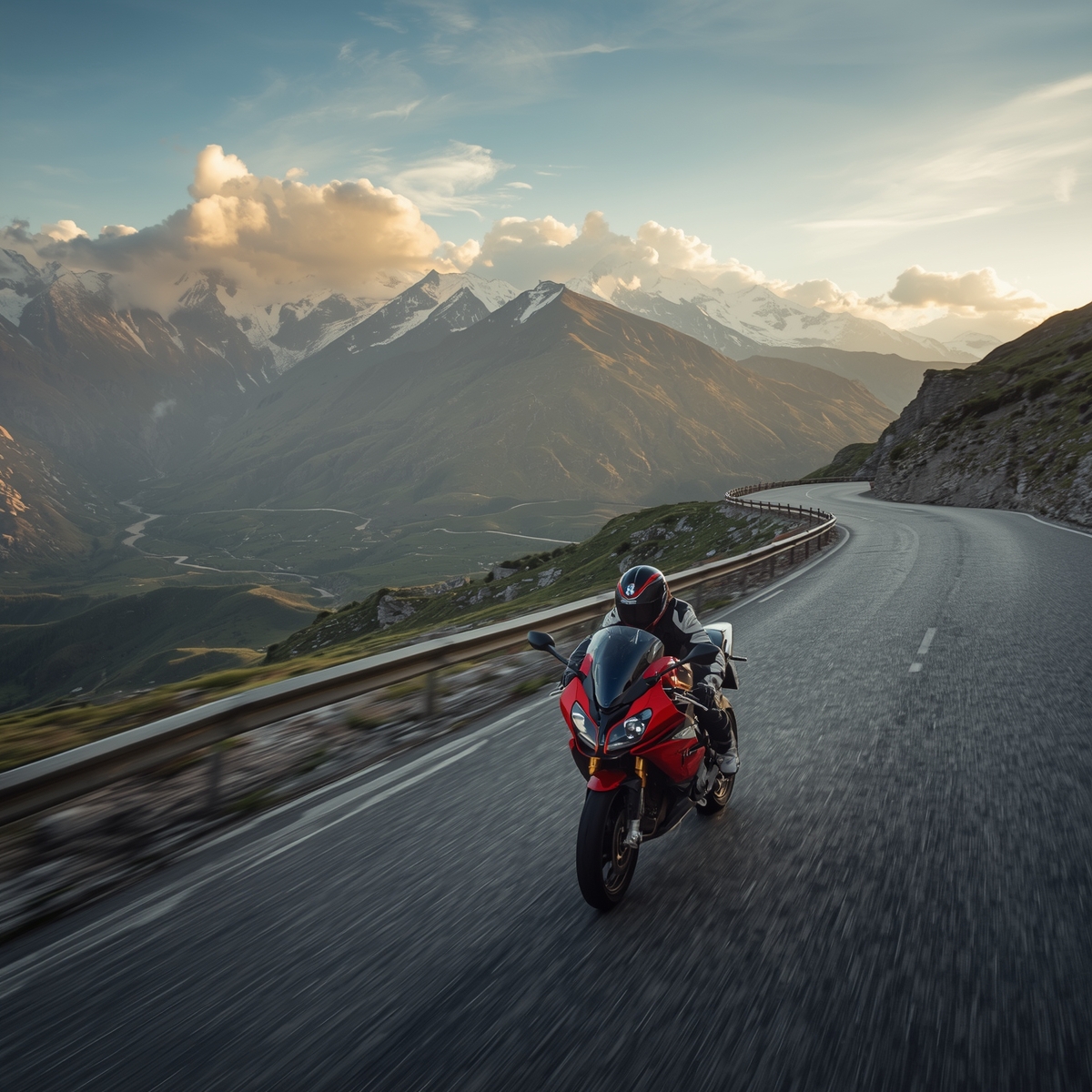
Col du Tourmalet
The most famous road in the Pyrenees at 2,115 metres. Wide, confident curves on the ascent. A summit where the air is thin and the view is absolute. Ride it before 9am — the road belongs to you.
Col d'Aubisque
A narrow road etched directly into the cliff face at 1,709 metres. The drop to the valley floor is immediate and considerable. This is the road most riders describe with their hands when they get home.
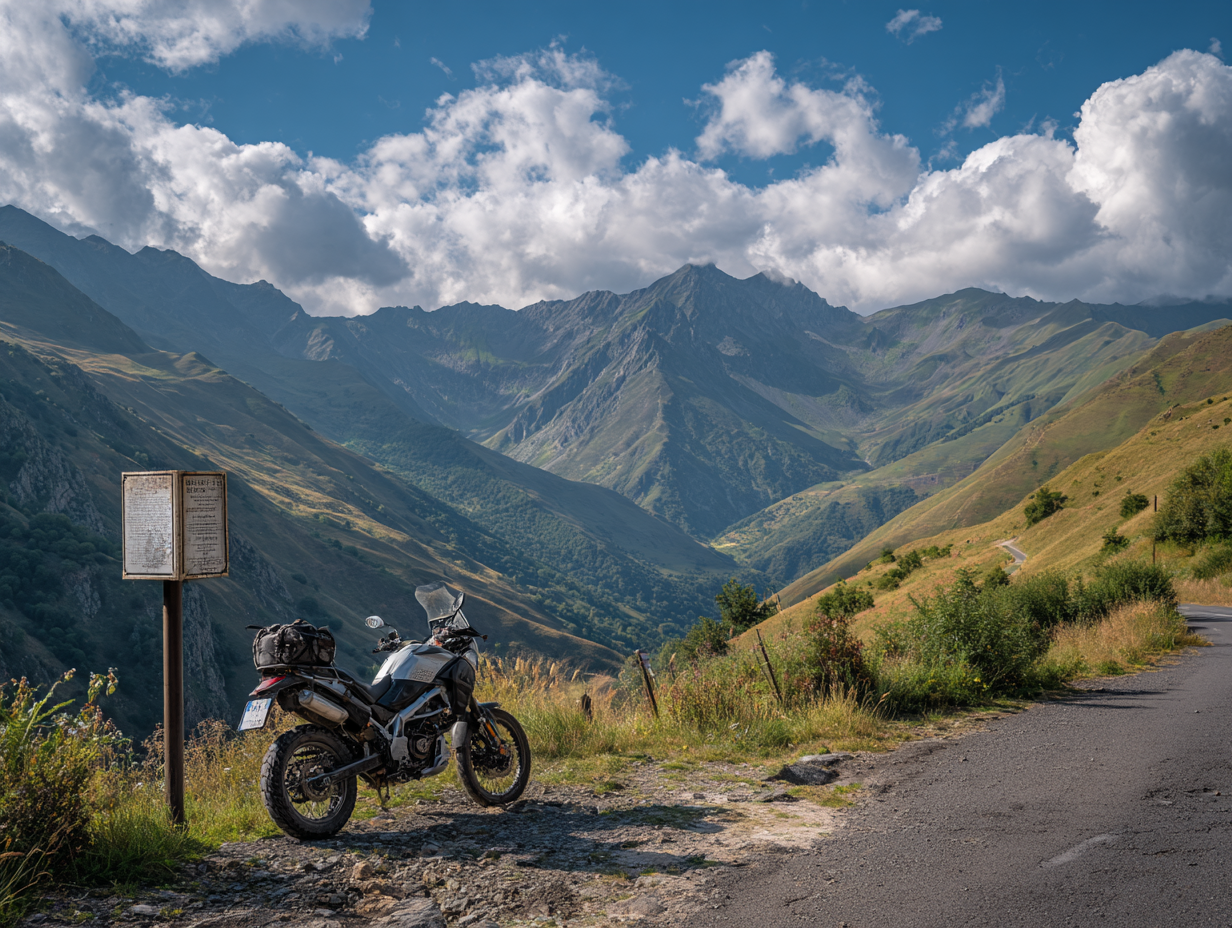
Col du Pourtalet
The French-Spanish border at 1,794 metres. The southern ramp drops faster and wider — a different country, a different cadence. From here, the Pyrenees belong to Spain.
The Spanish N-260
The finest sustained mountain road on the Iberian peninsula. Tight switchbacks in the gorges, sweeping arcs across high plateaux. The kind of road that makes you reconsider your route home.
Andorra
A mountain principality unlike anything else in Europe. Fuel cheaply, ride spectacularly. The passes into and out of Andorra are among the most dramatic in the entire range.
Col de Pailhères
The highest paved road in the Pyrenean range at 2,001 metres, and almost nobody knows it. Precise, demanding, and rarely crowded — the perfect final pass before the return to Toulouse.
Itinerary
Arrival — Toulouse
Fly into Toulouse. Collect your bike and join us for the route briefing. The evening begins with a welcome dinner overlooking the first foothills — your first look at what's coming tomorrow.
Into the Giant
You leave Toulouse on the D632 — no motorway, no tolls — as the Gascony plain opens ahead and the first Pyrenean ridgeline appears on the horizon. The road climbs steadily through Lannemezan and into the foothills. By the time the valleys narrow, the throttle feels different — more intentional. The mountains are asking something of you.
The Col d'Aspin at 1,489 metres is the opening act: a flowing, readable climb through beech forest with a technical descent toward Arreau that tells you exactly what kind of riding lies ahead. By the valley floor, you'll know your lines.
Then the road turns toward the giant. The Col du Tourmalet at 2,115 metres — the highest paved pass in the French Pyrenees — doesn't announce itself. It simply arrives and demands your full attention. Wide, confident curves on the ascent. A summit plateau where the air is thin, the views are without limit, and the silence between engines is its own reward. Ride it before 9am and the road belongs entirely to you.
In summer the western descent to Barèges is fully open — a steeper, rawer face of the mountain, narrow and direct. Drop through Sers and follow the valley south to Luz-Saint-Sauveur for the night: a compact mountain village cradled between ridgelines, with a good table and a secure garage for the bike.
The Cliff Road and the Crossing
Head north from Luz to Argelès-Gazost — a brief valley interlude — then swing west toward Eaux-Bonnes where the Col d'Aubisque begins. At 1,709 metres the road is cut directly into the cliff face: a narrow shelf suspended above a valley floor that does not forgive distraction. The drop is immediate and considerable. This is the road most riders describe with their hands when they get home.
Retrace east and push south to Col du Pourtalet at 1,794 metres, where France ends and Spain begins. The northern ramp is smooth and deliberate. The Spanish side falls away faster and opens wider — a different country, a different cadence. The Tena valley descends through Formigal and Panticosa to Biescas, then the N-260a bends southeast into the Ara valley.
You arrive tonight in Aínsa as the light turns gold — a UNESCO-listed medieval hilltop town above the confluence of the Cinca and Ara rivers, with a porticoed square that has watched mountain travellers arrive for a thousand years. Sleep well. Tomorrow is the finest road in Spain.
The Spine of Spain
This is the day riders talk about for years. Pick up the N-260 east of Aínsa and follow it without deviation — this road is the instruction. It runs along the Spanish flank of the Pyrenees in a sustained sequence of gorges, forests and open plateaux, never dropping below altitude, never repeating itself.
Through La Cabezonada and Campo the road climbs into tight limestone country. Castejón de Sos marks the highest section — this is where the N-260 earns its reputation, with switchbacks carved from sheer rock. East through Laspaúles and Torre de Buira the road descends into the Catalan Pyrenees, the landscape shifting to broader valleys and longer river bends.
Stop at La Pobla de Segur to refuel, then push through Sort where the turquoise Noguera Pallaresa runs alongside the road for twenty kilometres. Continue east to La Seu d'Urgell — the last Spanish town, a handsome place with a Romanesque cathedral and cold coffee on a sun-warmed terrace — then the final climb north into Andorra la Vella.
Fill the tank tonight — fuel is 20–30% cheaper than France. Walk the old quarter. Eat well. Tomorrow begins with the highest road in the range.
The High Road Home
The final day asks one more thing of you before it lets you go home. Leave Andorra and climb immediately into France via the high passes — this is not a warm-down, it is a proper finale. The Col de Pailhères at 2,001 metres is the highest paved road in the entire Pyrenean range, and almost nobody knows it. Precise, steep, and impeccably surfaced. Rarely a queue. The kind of col that makes riders stop at the summit, look back down, and seriously consider riding it again in the other direction.
Descend to Ax-les-Thermes, where open-air thermal pools bubble beside the road and the town has been hot since Roman legions stopped here to rest their feet. If your hands remember yesterday's N-260, fifteen minutes in the water before the final push is not indulgence — it is logistics.
The route home runs north via the D20 and N20 — no motorway, no A66 — through the Ariège valley. Foix appears around a bend: a medieval château rising on a sheer rock above the river, its three towers visible from the road like a punctuation mark on the end of the mountains. From here the valley broadens, the ridgelines flatten, and Toulouse reassembles itself on the horizon kilometre by kilometre.
By the time the city arrives, the past four days have compressed into something dense and permanent. The bike goes back. The roads don't leave you.
View the complete itinerary on Google Maps
The complete ~900 km summer route — all four riding days, zero toll roads — mapped and ready to explore. Use it to study the passes, check road conditions, or share with your riding companions before departure.
Toulouse → Col d'Aspin → Col du Tourmalet → Barèges → Sers → Luz-Saint-Sauveur → Argelès-Gazost → Col d'Aubisque → Col du Pourtalet → Biescas → Aínsa → La Cabezonada → Campo → Castejón de Sos → Laspaúles → Torre de Buira → La Pobla de Segur → Sort → La Seu d'Urgell → Andorra → Col de Pailhères → Toulouse · ~940 km · Summer only · No toll roads
In the price
- 4 nights accommodation (4★ mountain hotels)
- Daily breakfast and 4 Michelin-recognised gourmet dinners
- Expert bilingual guide all 5 days
- GPS routes and daily briefing
- Toulouse Airport transfers
- 24h emergency assistance
Not included
- Motorcycle rental available through our approved partners from €120/day — we arrange everything for you.
- Fuel is NOT included in the tour price
- Flights
- Lunches and alcoholic drinks
- Travel insurance (required)
- Options: Support vehicle with tools and spares. Luggage transfer between hotels.
The Excellence Guarantee
- Accommodation is selected and confirmed at time of booking. Specific properties may vary by season — all alternatives meet the same 4-star, spa, and pool criteria. The Michelin-starred dinner in Aínsa requires advance reservation and is booked on your behalf at time of enquiry. In the rare event that full-group availability cannot be secured on your specific date, a table of equivalent starred or gastronomic standing will be confirmed without reduction in quality.